
What Reading Level Should Patient Materials Actually Be Written At?
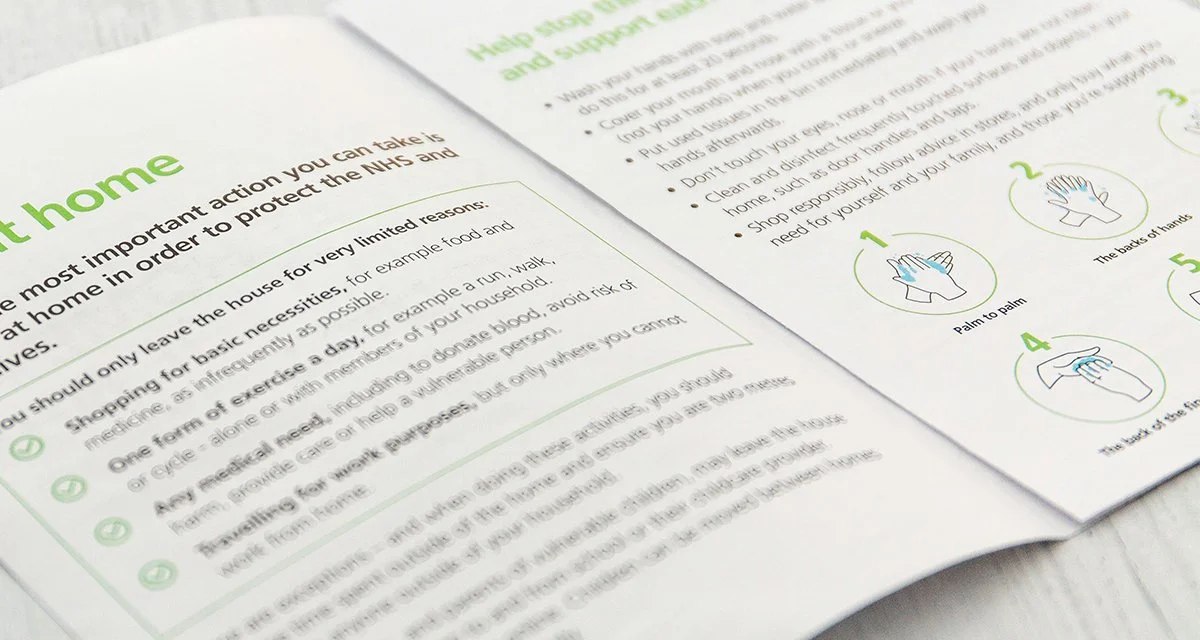
Patient education materials should be written at a sixth- to eighth-grade reading level. That's the standard the American Medical Association and National Institutes of Health both recommend. In practice, they rarely are. When researchers have actually measured this, from single clinics to twenty years of the most respected medical journals in the country, the materials patients are handed consistently land two, three, even five grade levels above where they need to be. This isn't a fringe problem or a formatting detail. It's a quiet, persistent mismatch between what people are given to read and what they can be expected to read, and it's been measured carefully enough that we don't have to guess at its size.
How big is the gap between what patients read and what they're given?
At one primary care clinic, the gap was measurable in a very concrete way. Researchers assessed the actual reading levels of 175 patients using a validated literacy tool, then separately measured the grade level of the handouts their electronic health record gave them for the five most common diagnoses: hypertension, diabetes, high cholesterol, back pain, and depression.
More than half of those patients, 54.8%, read at or below an eighth-grade level. The "standard" handouts they received averaged a 9.7 grade level by one common readability formula (SMOG), and even the "easy-to-read" version, the one meant to solve this exact problem, still averaged a 7.25. That's still too advanced for close to one in five patients in the study.
What makes this finding land harder than a typical statistic is what happened next: 76.4% of these same patients said they did read the materials they were given, despite the mismatch. People weren't avoiding the handouts. They were doing their part, reading materials that, for a meaningful share of them, weren't built to meet them where they were.
Is this just one clinic's problem, or something bigger?
It's bigger, and it's been bigger for a long time. A separate analysis looked at 2,585 patient education materials published across ten high-impact medical journals (JAMA and its network, Circulation, Annals of Internal Medicine) over a twenty-year span, 1998 to 2018. These are among the most credible sources of health information a patient could be handed.
Across all seven readability formulas used, materials averaged an 11.2 to 13.8 grade level: high school through early college. Only 2.1% met the AMA's sixth-grade target. Only 8.2% met the more forgiving NIH eighth-grade target. And across that full twenty-year window, readability did not meaningfully improve. Awareness of health literacy as an issue grew substantially over those two decades; the materials themselves largely didn't change.
For context the researchers cite: the average U.S. adult reads at an eighth-grade level, and the average Medicaid enrollee reads at a fifth-grade level. The materials being measured were landing three to nine grade levels above that.
Why doesn't "easy-to-read" solve it?
It's tempting to treat "easy-to-read" as a fix, a checkbox that, once ticked, closes the gap. The clinic-level data says otherwise. Even the simplified version of a handout, explicitly built to be more accessible, still outpaced the reading level of a meaningful share of the people receiving it.
Part of the explanation is that readability formulas and true comprehension aren't the same thing. Grade-level scores are built from things like sentence length, word length, and syllable count: useful, well-validated proxies, but proxies nonetheless. A term can be short and still be unfamiliar to a lay reader; a formula can score a passage as "easy" while the underlying concept remains genuinely hard to follow without a plainer explanation. Both studies flag this limitation honestly. Readability is necessary, but it's not the same thing as comprehension, and neither study measured comprehension directly.
The other part of the explanation is simpler: "easy-to-read" is often treated as a lighter edit of the standard version, rather than a document built from the ground up for a different reader. A pass that shortens some sentences and swaps a few words doesn't automatically close a three-grade-level gap.
What actually moves the needle?
The twenty-year journal analysis contains a genuinely useful exception. Among all ten journals studied, one stood out: Annals of Internal Medicine's general patient education materials, not their research summaries, their general education pieces specifically, had 79.8% meeting the NIH's eighth-grade target. Every other journal and material type studied fell far short.
That gap between one journal's general education content and everything else studied is worth sitting with. It suggests this isn't a problem where the underlying medical content is simply too complex to simplify. It's more likely a difference in editorial process: whether readability review is a required, structured step before publication, or an assumption that gets skipped. Where it's built into the process, the outcome changes. Where it isn't, the average grade level barely moves over twenty years.
That reframes the whole problem usefully. This isn't primarily a writing-talent gap. It's a process gap, a missing checkpoint in how patient materials get reviewed before they reach someone in a waiting room or an exam room.
A few common questions
-
No. It's a floor, not a ceiling on someone's intelligence. Reading level under stress, unfamiliar medical terminology, and limited time in an appointment all reduce effective comprehension regardless of someone's baseline education. Writing plainly is a way of respecting someone's time and state of mind in that moment, not their intellect.
-
Not inherently. Both studies point to editorial process, not content restriction, as the lever that matters. Annals of Internal Medicine's general education materials hit an eighth-grade level far more often than comparable journals without sacrificing their role as credible clinical sources.
-
used multiple formulas precisely because no single one is perfect; each has known blind spots (short-but-unfamiliar words, sentence structure quirks). Using more than one, and treating the result as a helpful signal rather than a final verdict, is the more defensible approach either study models.
-
research specifically measured handouts and published patient education material, but the underlying gap between how healthcare information is typically written and how people typically read shows up anywhere clinical language reaches a general audience: intake forms, after-visit summaries, even signage.
Sources:
Imoisili et al. (2017), "Discrepancy Between Patient Health Literacy Levels and Readability of Patient Education Materials from an Electronic Health Record," Health Literacy Research and Practice.
Rooney et al. (2021), "Readability of Patient Education Materials From High-Impact Medical Journals: A 20-Year Analysis," Journal of Patient Experience.